
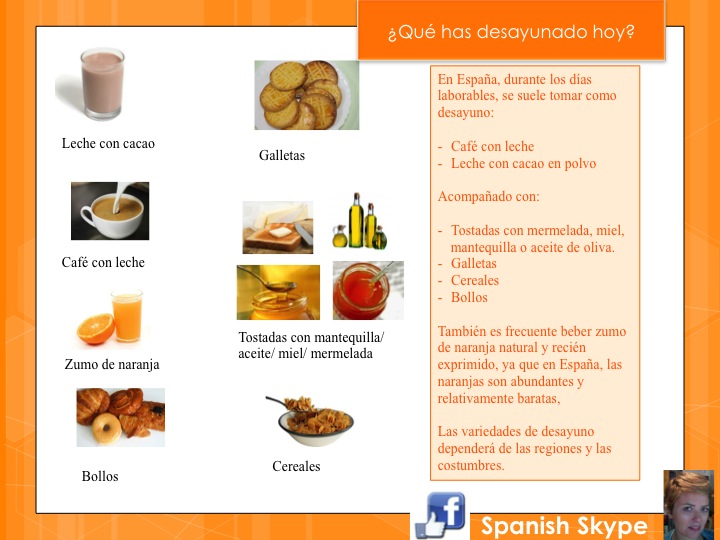
 En España, durante los días laborables, se suele tomar como desayuno:
-Café con leche
-Leche con cacao en polvo
Acompañado con:
-Tostadas con mermelada, miel, mantequilla o aceite de oliva
-Galletas… Continue reading

En España, durante los días laborables, se suele tomar como desayuno:
-Café con leche
-Leche con cacao en polvo
Acompañado con:
-Tostadas con mermelada, miel, mantequilla o aceite de oliva
-Galletas… Continue reading
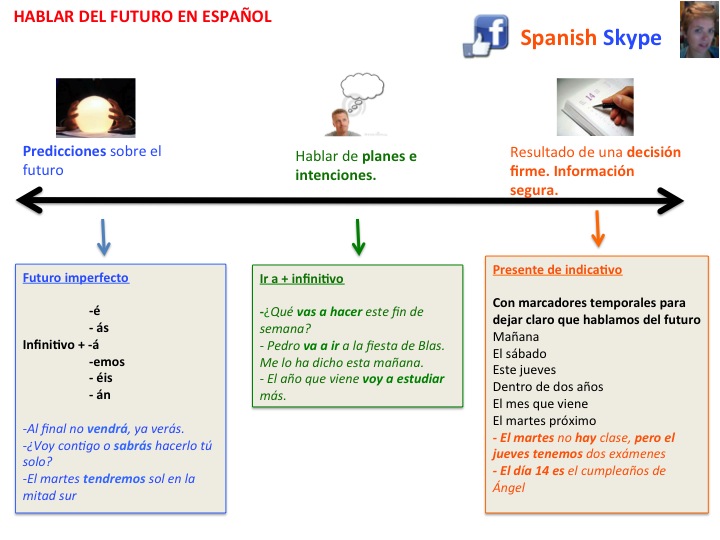
 Es lógico pensar que para hablar de hechos futuros en español usamos el tiempo futuro.
Sin embargo, existen más formas de referirse al futuro en español.
Aquí tienes las tres formas más usadas para hablar del futuro:
– futuro imperfecto
– ir a + infinitivo
– presente de indicativo Continue reading
 It would be natural to assume that if you want to talk in Spanish about something that will happen in the future, that you would use the future tense of the verb.
However there are other ways of telling about future events.
Here are the three most common ways of telling about future events:
– futuro imperfecto.
– ir a + infinitivo
– presente de indicativo Continue reading
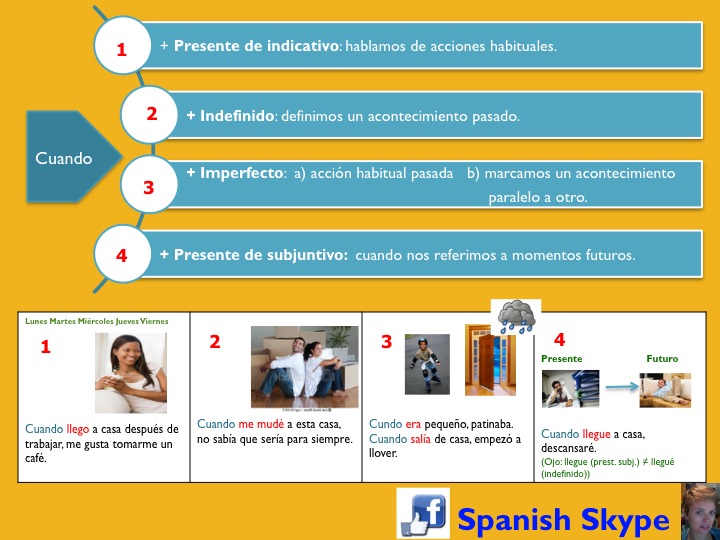 Cuando + indicativo/ subjuntivo
– Cuando tengo tiempo, voy a visitar a mi familia
– Cuando tenga tiempo, iré a visitar a mi familia Continue reading
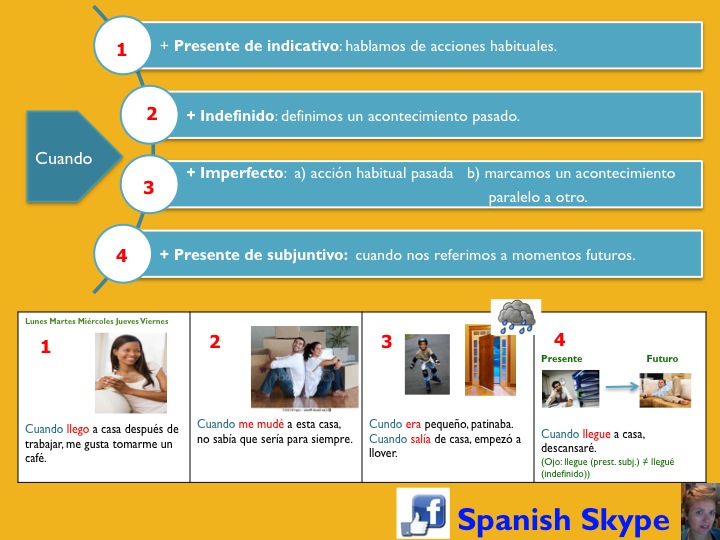 Cuando + indicativo/ subjuntivo
– Cuando tengo tiempo, voy a visitar a mi familia
– Cuando tenga tiempo, iré a visitar a mi familia Continue reading
Pretend to be crazy = Hacerse el loco
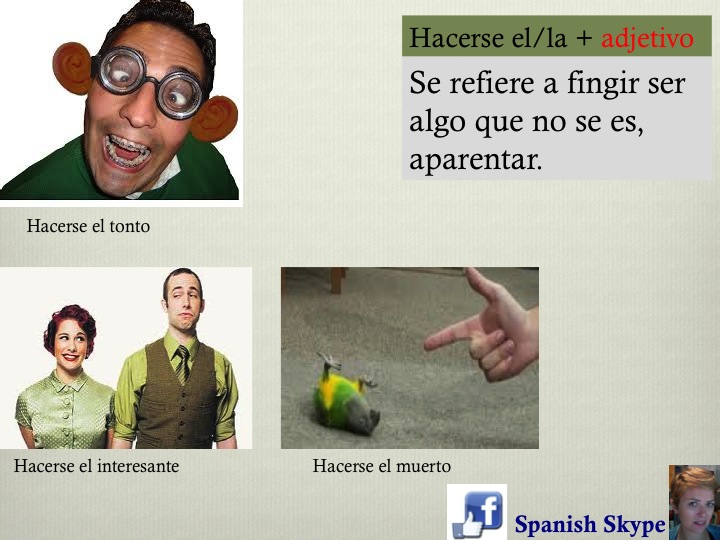 ¿Alguna vez te has hecho el tonto? ¿Te has hecho el loco?
– hacerse el tonto
-hacerse el sueco
-hacerse el muerto
-hacerse el interesante Continue reading
 Hacerse el loco (pretend to be crazy)
¿Alguna vez te has hecho el loco? ,¿Te has hecho el tonto?
– hacerse el tonto
-hacerse el sueco
-hacerse el muerto
– hacerse el interesante Continue reading