

 Although the rules of grammar for conditional sentences — usually those using the word si (“if”) — can get fairly complex, in the vast majority of cases the decision of which verb tense to use after si is easy to remember.
The first thing is to remember that except in very rare cases, si is never followed by a verb in the present-tense subjunctive mood.
That said, there are basically four types of si clauses that become part of a sentence. Continue reading
 ¿Cómo es tu país visto con los cinco sentidos?
 “Por” and “para” have a variety of meanings, and they are often confused.
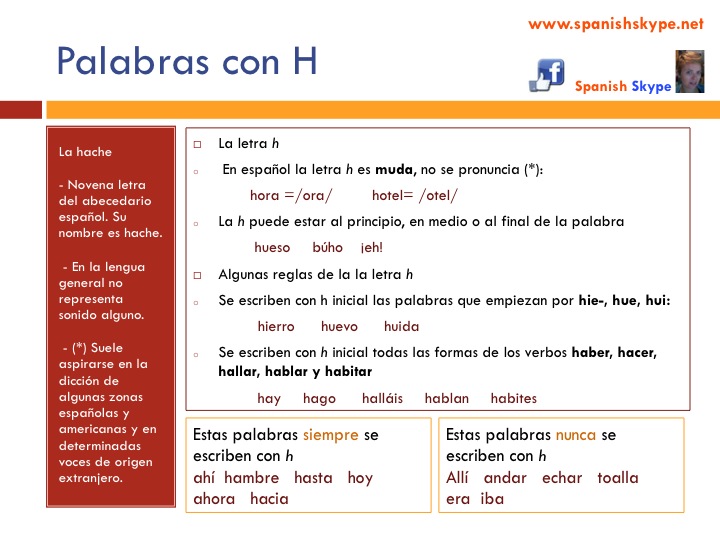 Do you know the rules of the letter h?
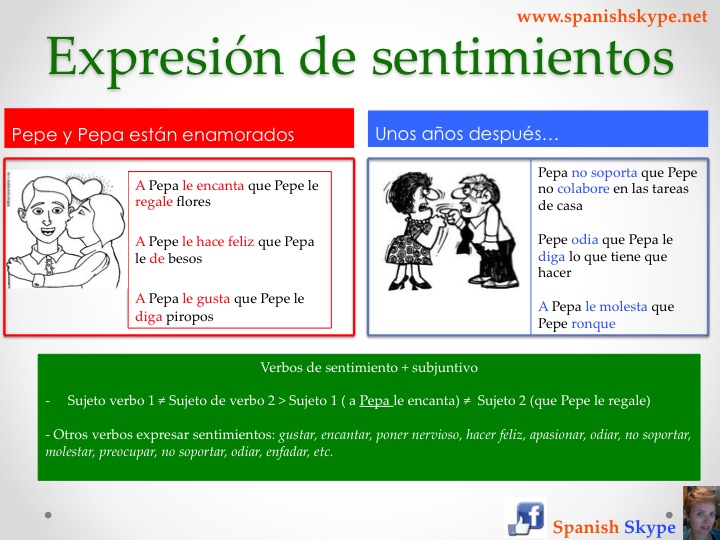 Expresión de sentimientos + subjuntivo
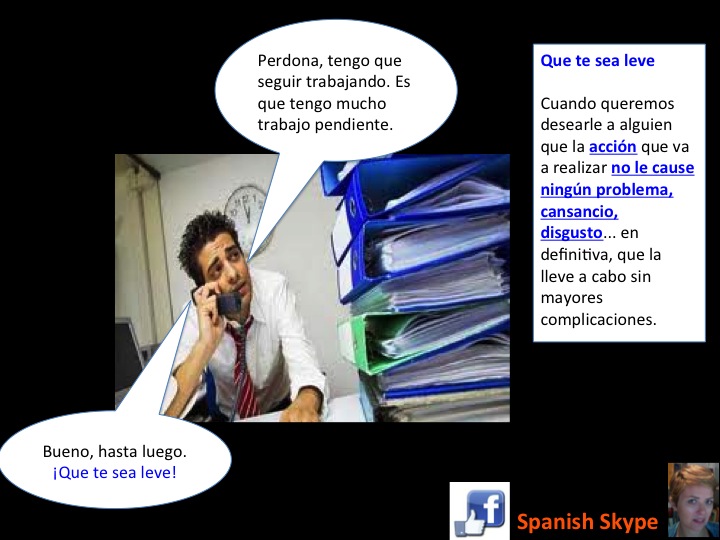 How do you say in Spanish…?
 ¿Qué significa “que te sea leve”?