
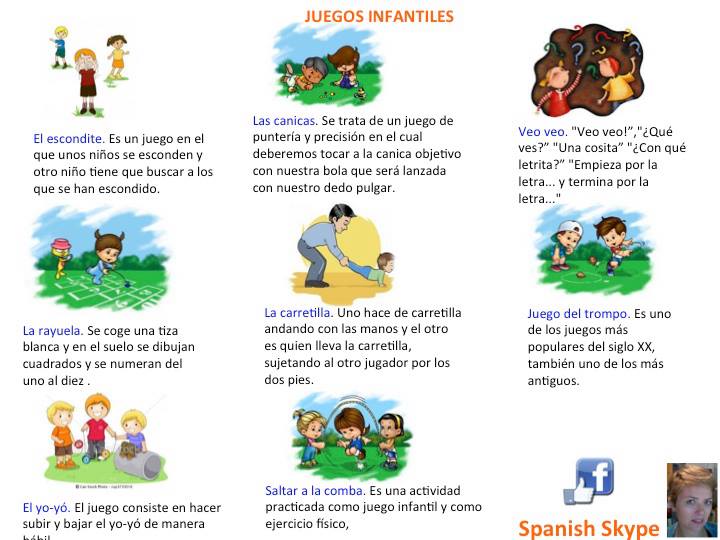
 ¿A qué jugabas de pequeño/a?
Juegos infantiles populares:
– el escondite
– el pillar

¿A qué jugabas de pequeño/a?
Juegos infantiles populares:
– el escondite
– el pillar
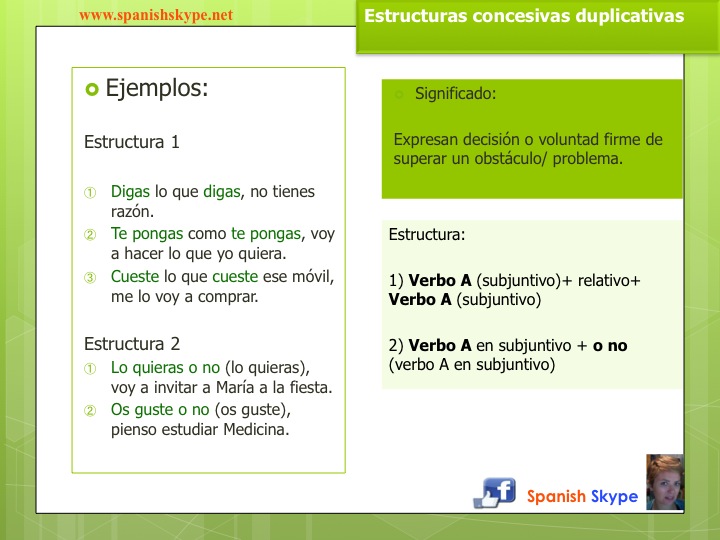 Existen estructuras reduplicativas concesivas en español que usan el mismo verbo en subjuntivo dos veces. Tiene un valor concesivo y significa no importa.
-No abras venga quien venga. (= No importa quien venga; tú no abras.)
-Pase lo que pase, recuerda cuál es tu obligación. (= No importa qué pase, recuerda cuál es tu obligación.)
También tienen valor concesivo las oraciones disyuntivas reduplicativas introducidas por los nexos: o, que… o que, ya… ya y bien… bien. Si el verbo es el mismo en las dos oraciones puede omitirse el segundo.
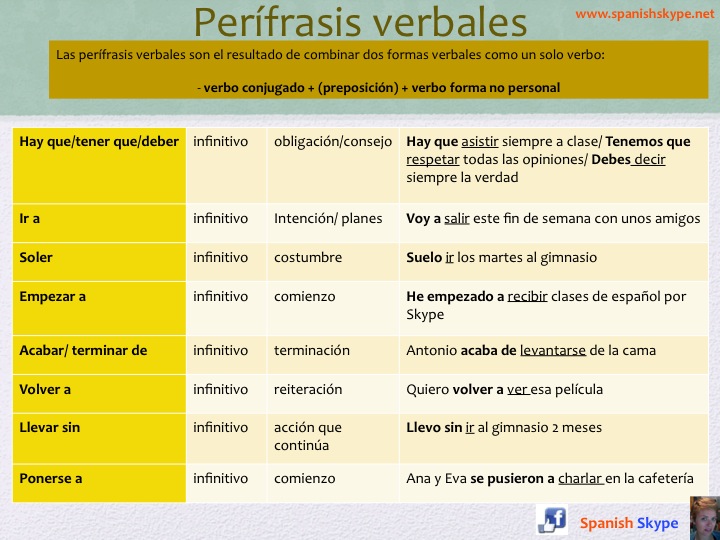 In Spanish, a periphrasis is a special construction with at least two verbs (and sometimes other words) that behave as a group like a single verb would.
Periphrases normally have a helper verb, which is fully conjugated, but does not provide the main meaning in the periphrasis, and another non-finite verb (ie. an infinitive or a participle) which is not conjugated, but provides the main meaning of the periphrasis
For example:
Voy a pensar (I am going to think) Continue reading
 Learn how to use the Pretérito Indefinido tense in Spanish.
Improve your Spanish with SpanishSkype Grammar Tips.
Learn Spanish language online with us! You’ll get a free trial lesson! Continue reading
 Although the rules of grammar for conditional sentences — usually those using the word si (“if”) — can get fairly complex, in the vast majority of cases the decision of which verb tense to use after si is easy to remember.
The first thing is to remember that except in very rare cases, si is never followed by a verb in the present-tense subjunctive mood.
That said, there are basically four types of si clauses that become part of a sentence. Continue reading
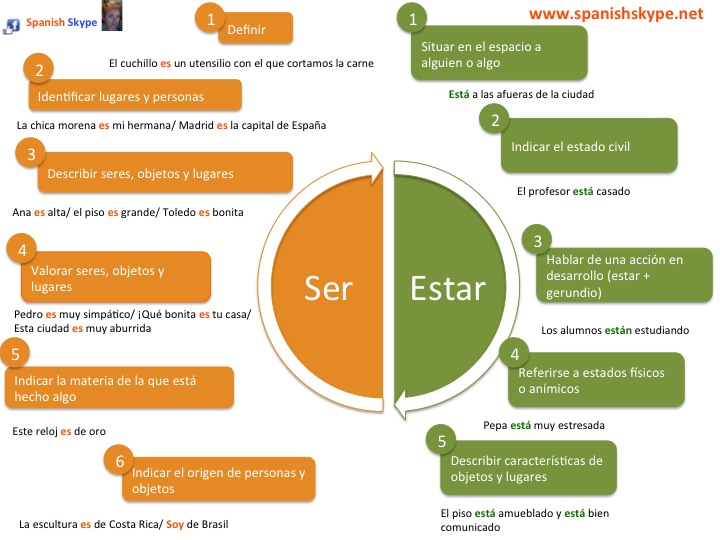 ¿Eres o estás?
That´s the question bedeviling millions of students of Spanish.
Look here some tips that can help you improve your Spanish. Continue reading
 ¿Cómo es tu país visto con los cinco sentidos?
– vista
– oído
– tacto
– olfato
– gusto Continue reading